 The author says:
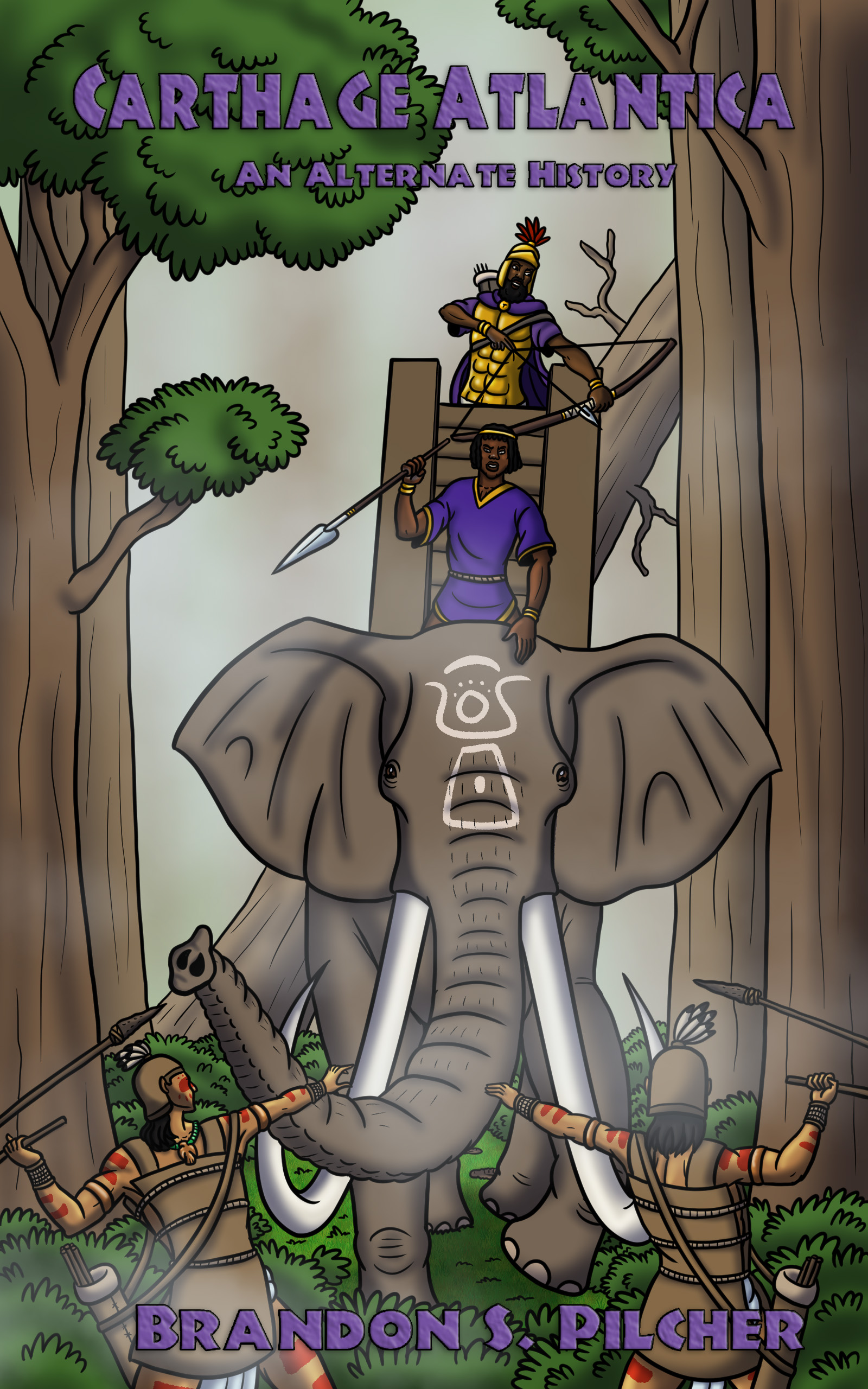
This is my second cover design for my novella “Carthage Atlantica”, an alternate-history tale about ancient Carthaginians from North Africa discovering the Americas in 200 BC. This time, I did a composition that made it look as if the war elephant was heading in the viewer’s direction, in response to your criticism of the previous cover design.
[original submission and comments here]
Nathan says:
Yes, you’ve taken some comments to heart, but it seems like you don’t know why those comments were made. I’m again going to be extremely unfair by using those same Frank Frazetta comparisons:
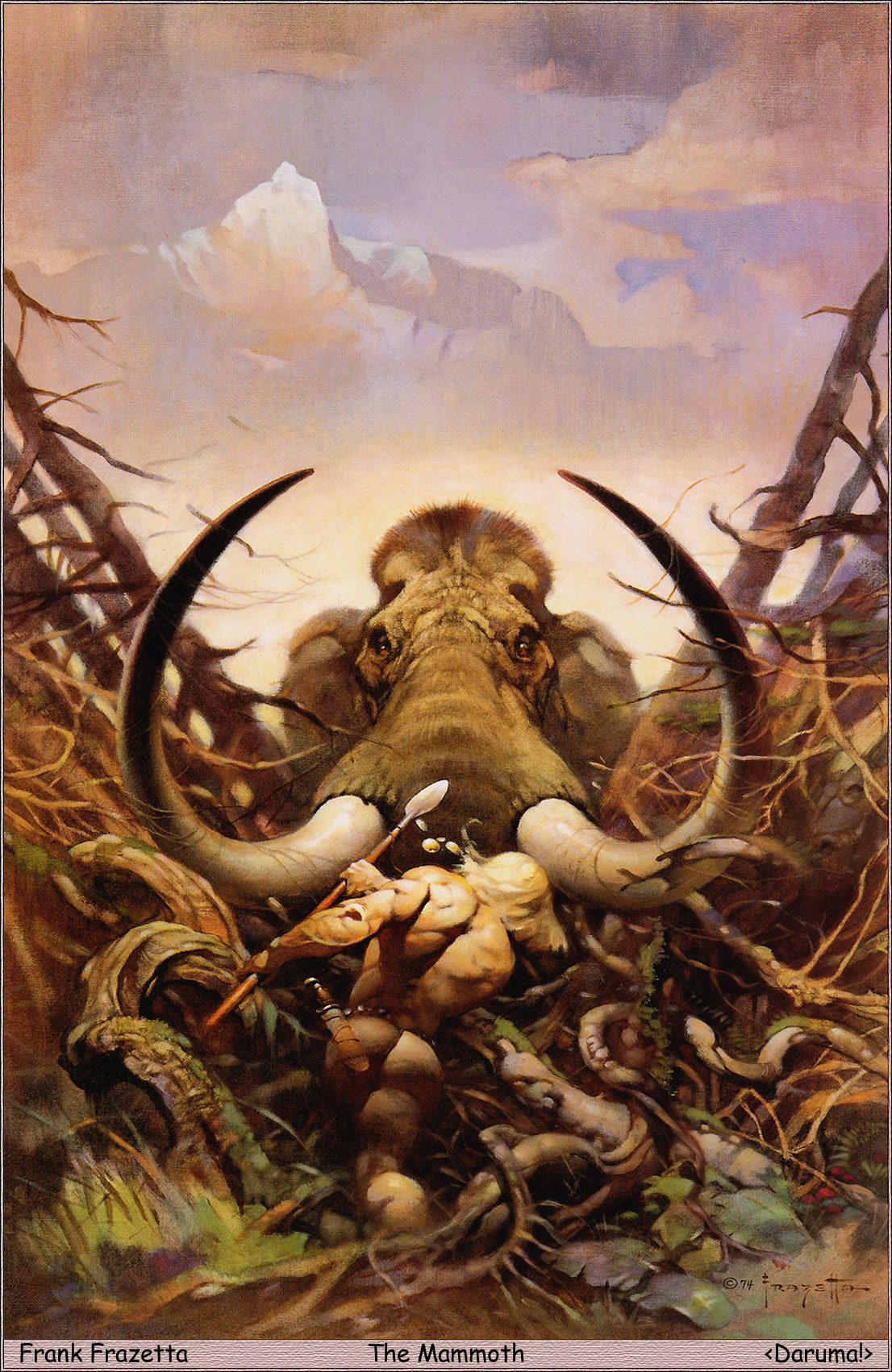
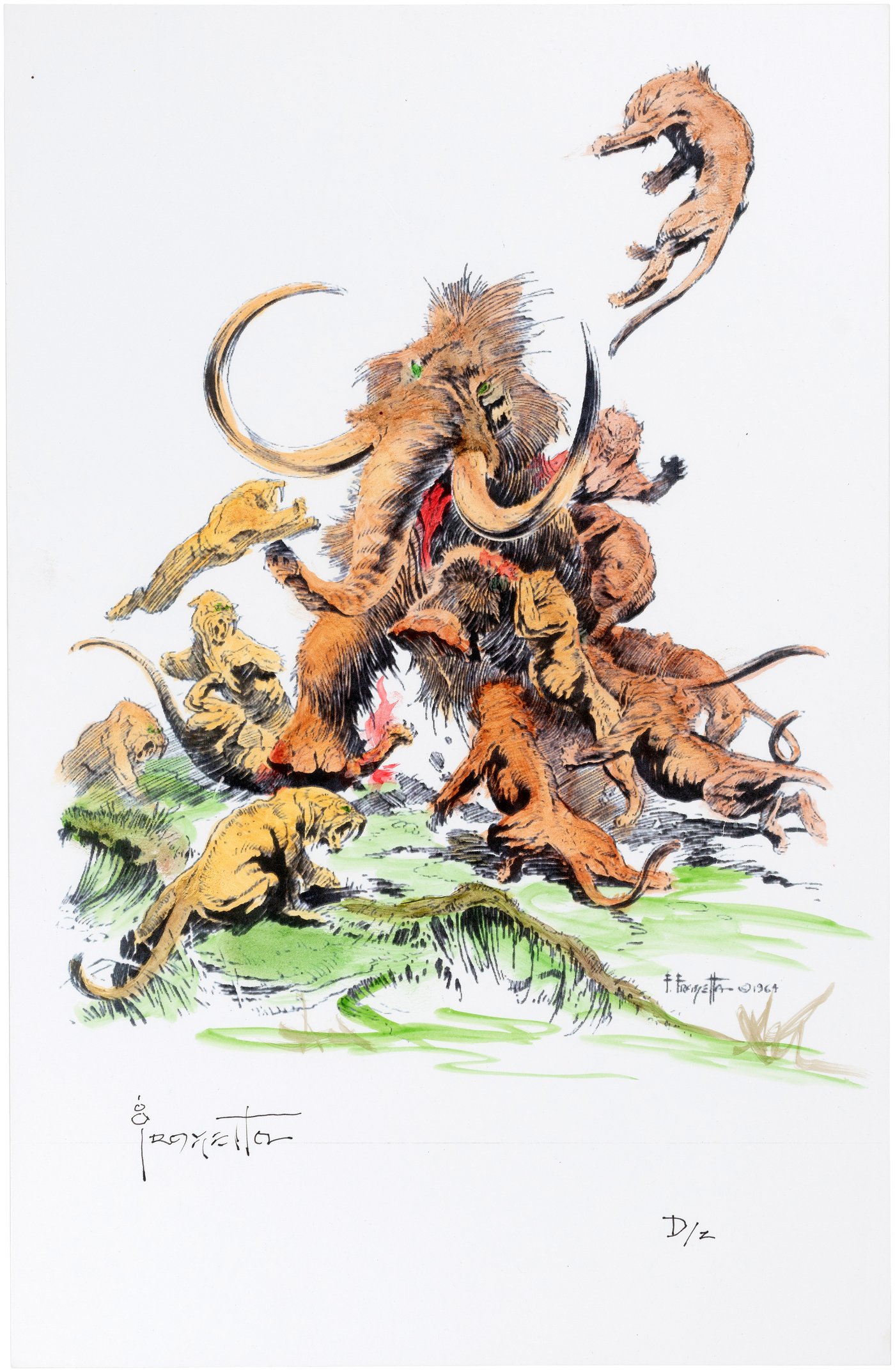
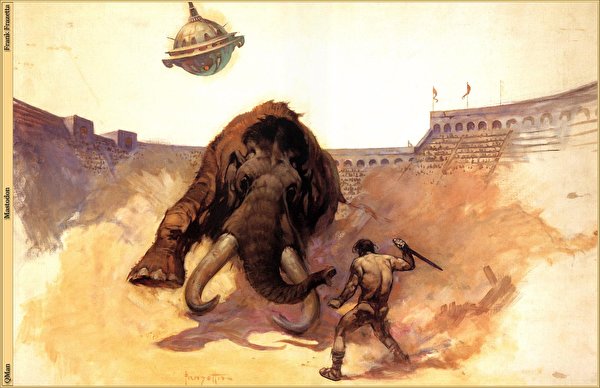
Look at the strong use of contrasts to draw your eye to the important central figures. Backgrounds, when they exist, are atmospherized for much less contrast. There are no straight vertical lines; vertical lines are static. Instead, everything is focused around dynamic diagonals. And the illustrations that were meant for book covers have areas in which the title can be inserted for maximum visibility.
Now compare that to yours. The trees and foliage are rendered with as much detail and contrast as the elephant; the “misting” effect only helps to flatten the perspective, making the central figures no more important to the eye than the background. You’ve even taken a step backwards as far as the type is concerned; while the title and byline in the original cover were too small and inobtrusive, they were at least readable against the background. In the new version, both are scrunched into spaces where they compete with — and lose to — the busy image (in the case of the byline, losing the battle entirely).
Here’s an exercise:
- Find a bunch of dynamic, adventurous old covers by Frank Frazetta, Boris Vallejo, etc. (The covers, not just the artwork. We don’t want to ignore the type placement here.)
- Do fifteen-second thumbnail sketches of each: Block in the title and byline, and indicate where the lights and darks are, where the lines and curves are. Heck, pull them into your graphics program and look at them in black and white to see where the impact is.
- Then start your cover from similar thumbnails. Block in big, readable areas for your title and byline, and where you want the viewer’s eye to concentrate.
- THEN start sketching out your artwork.
Other suggestions?