The author says:
*** Proof of Concept ***
Title: Borderlands 1
Genre Keywords: Fantasy / Greco-Roman Punk / Creation Mythology / Existentialism / Transcendentalism
Narrative Style: 1st Person Present (but NOT specifically YA either)
Book Format: Story broken down into a series of short episodes. Each episode from a different / unique character perspective.
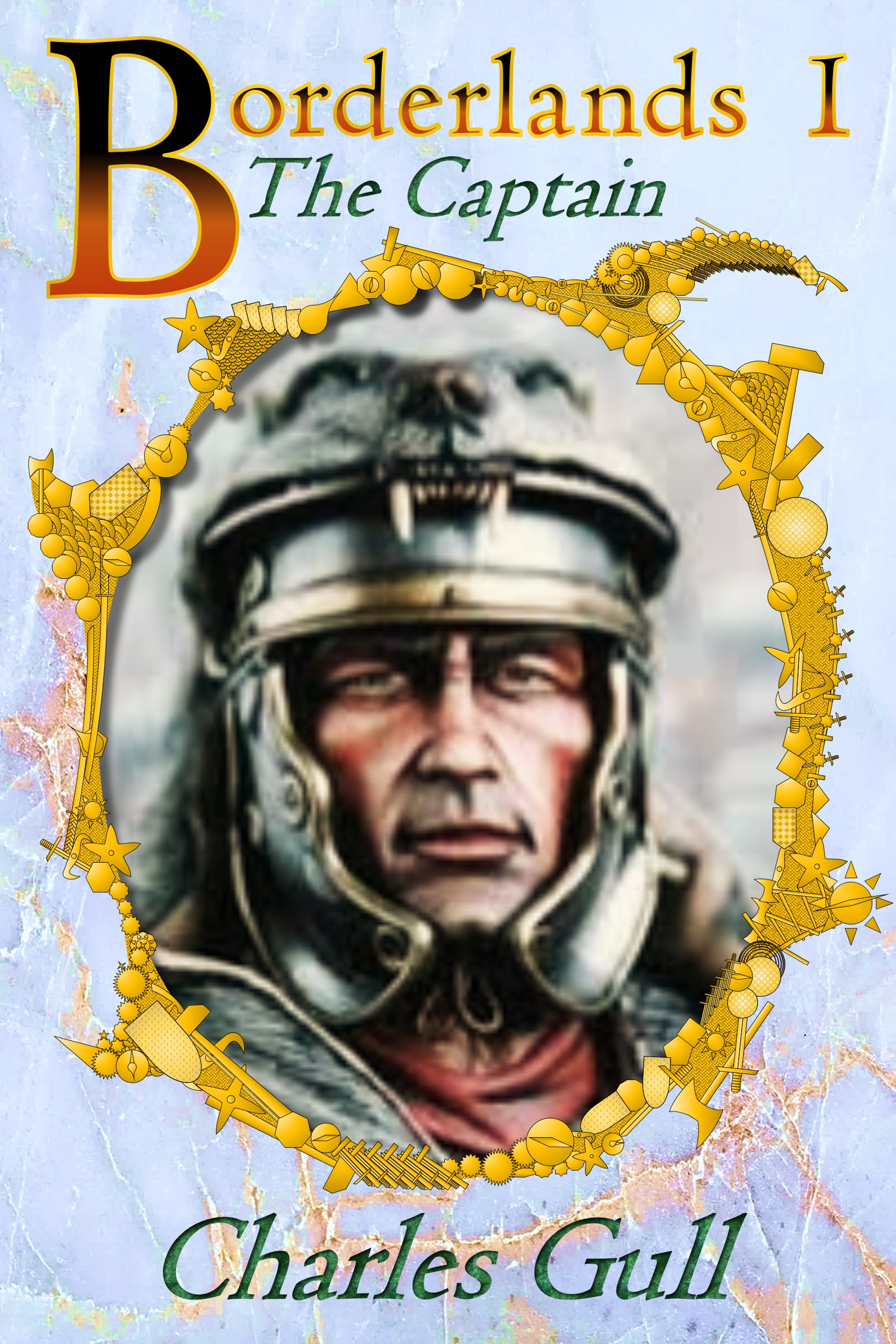
Intention: Establish a strong but flexible branding. Each book has the same basic cover layout. Main title number, Subtitle, Portrait and frame embellishments change each time.
Comments: I am interested in all your comments and suggestions and, to maximize their value to me, please be clear if you are talking about: this book cover as a stand alone piece; this book cover as the first in a brand; the execution of this example of a piece of artwork.
Book Blurb (early draft): The ambitious Cpt. Banak Doneir of the Aether Guard leads his men on patrols into the barren, inhospitable and forever corrupted Borderlands where they hunt down and destroy the encroaching Spawn of Chaos. Back home in the Rationalle there is no respite. He must battle against red tape and beurocracy, avoid the attentions of his powerful, yet mean spirited, family and win over the woman of his dreams. It only takes one slip for the delicate balance of his life to come crashing down. Can he protect his beloved homelands whilst remaining true to himself or must he become the thing he most despises in order to overcome?
Nathan says:
There’s a lot of good stuff to work with here.
Regarding the series branding elements:
- Lose the italics.
- Your choice of a light border on the series title, against a light background, makes the letters effectively thinner and weaker.
- Similarly, the light marbled background outside the oval frame matching the background inside the frame wastes an opportunity for contrast. Have you tried a dark background outside the frame?
- The ornamentation on the frame really doesn’t fit. You’ve already got a guy in armor as your main image element; surrounding him with itty-bitty martial ornamentation is overkill.
Regarding the artwork for this cover: The underlying artwork is good, but I assume that you have it in a higher resolution for the real cover, yes?
Other comments?