Category: Covers

The Multi-Passionate Entrepreneur’s Playbook

The author says:

This is a non fiction how to business book geared to entrepreneurs who want to create online businesses.

Nathan says:

The biggest problems are those you can see in the thumbnail — or rather, that you can’t see: The entire cover is unreadable and unintelligible.  The fonts are too neutral and unassuming, the orange-vs-teal color scheme doesn’t contrast in value enough for the subtitle to be distinct from the background, and the stock graphic doesn’t seem to have any relation to the topic — it certainly doesn’t draw in potential readers who would want to learn about online businesses. The entire effect is definitely not a passionate one.

There are a lot of online business how-to books out there.  Your cover needs to be aesthetically appealing and easily understood, or else the eyeballs of your target audience won’t even pause on your cover before being drawn to the covers to either side of it in their Amazon search:

These are the covers that come up when I search for “online business” books on Amazon.  This is your competition.

My advice would be to start again from the concept up.

(And as an aside, I have no idea what a “PMP” is, or why that designation improves your credibility.)

Other comments?

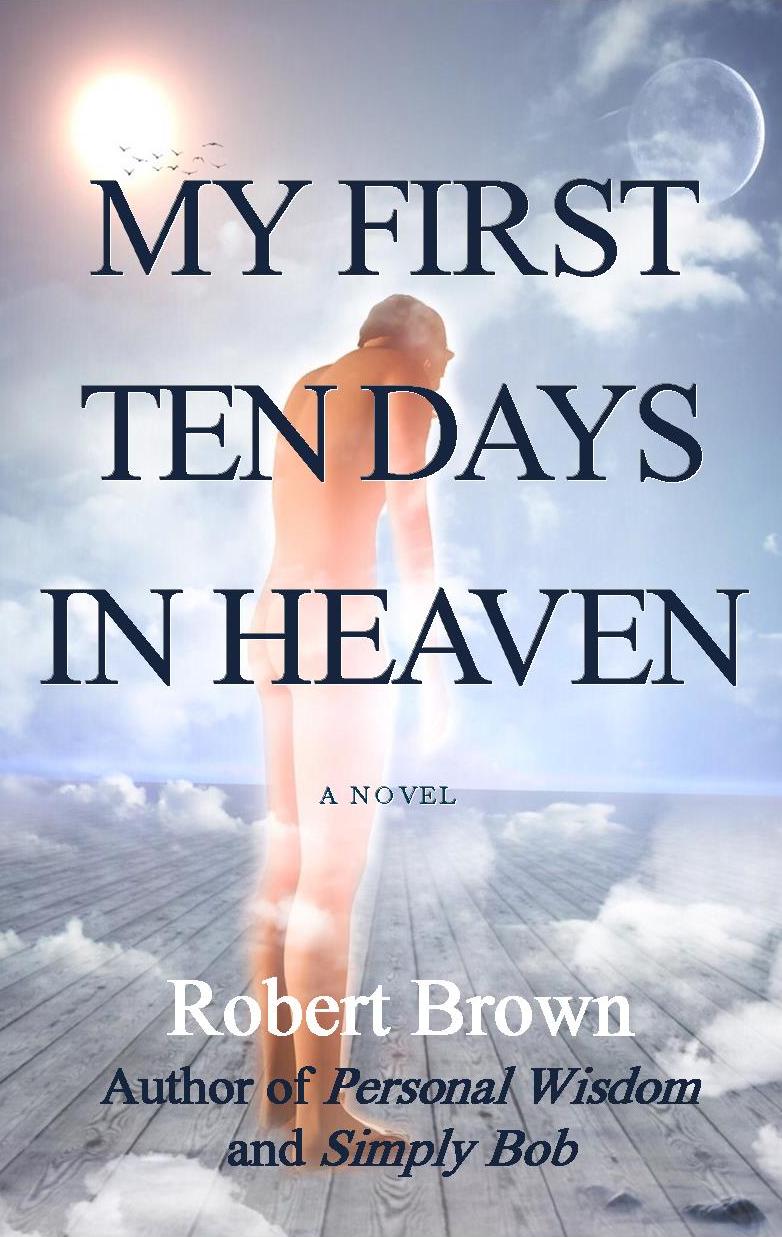
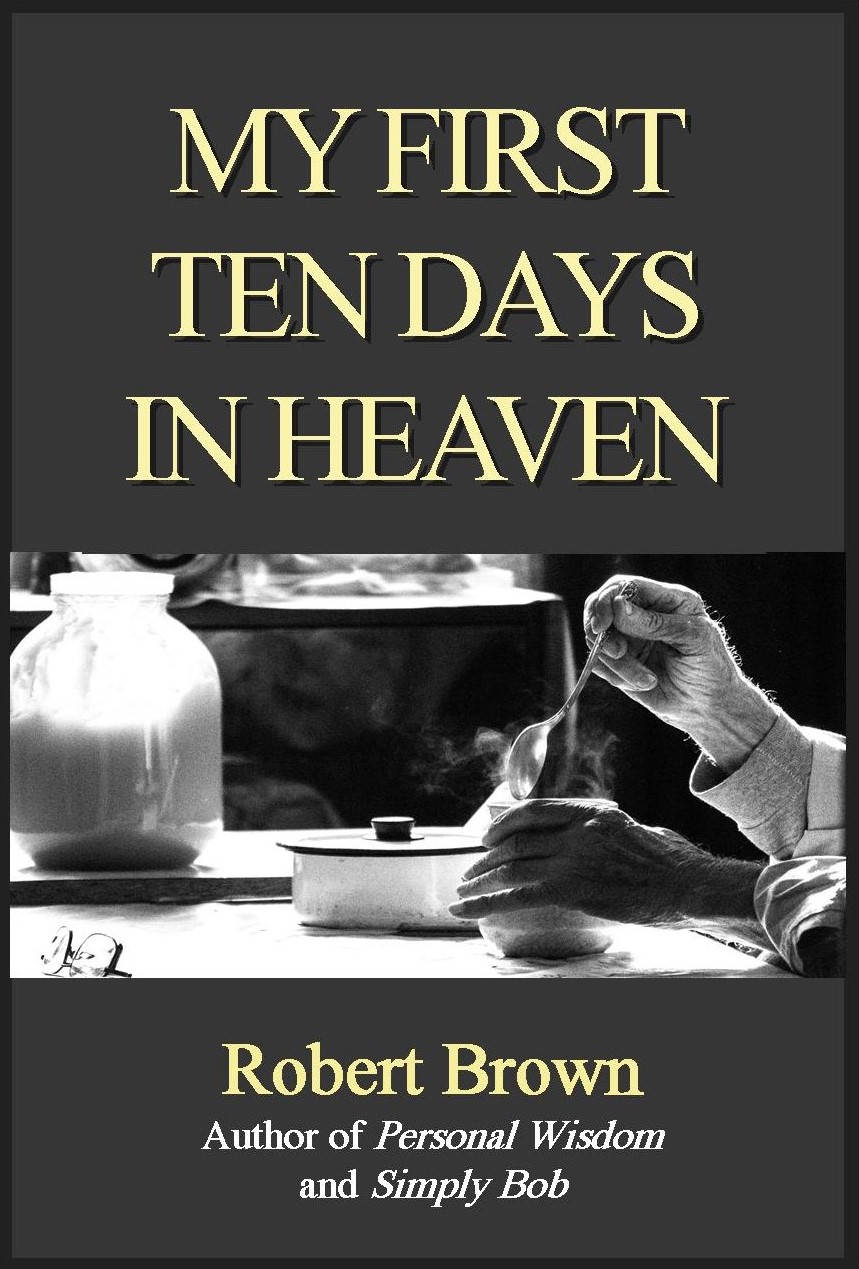
First Ten Days in Heaven

The author says:

Michael Greyson awoke one morning feeling better than he had in years. Unfortunately, he soon learned he felt so good because he had died the day before. The upside to being dead was he made it to Heaven. The potential downside was he didn’t believe in Heaven, or God. Although Heaven is the last stop, Mike has one other option. This is a thoughtful story about being dead and Mike’s first ten days in heaven; helped by his guide Pete, no relation to the famous saint. Audience is baby boomers seeking a better understanding of the meaning of life. It’s literary fiction.

Nathan says:

I often joke that literary novels go out of their way to look like they’re about nothing, but in this case I think even that has been done to excess.  I understand not wanting to go “flashy” on the cover, but even with a muted and understated design, you could at least make the font a touch more eye-catching.  (And thicker; there’s no reason that the byline and accompanying credits need to be so hard to read.)

I’ll let others suggest font upgrades if they so choose — as far as I’m concerned, ANY clean, sedate typeface which is more easily read is an upgrade.

Have at it, folks!

Dirty Snow

The author says:

Dirty Snow is a contemporary erotic romance retelling of Snow White set in a made-up Kingdom. Target readers would be those who enjoy the stories of Madison Kaye and Nikki Sloane.

Nathan says:

It’s a good cover, but I don’t think it would appeal to what you say is your target audience.  I couldn’t find Madison Kaye on Amazon (probably some funky variant spelling), but this is what came up for Nikki Sloane:

…which is pretty much what I think of when I hear “erotic romance”: people gettin’ it on. And yes, a couple of the covers crop out most of all of the face to concentrate on the bodies.

If you search “erotic romance fantasy” on Amazon, the covers are a little different: most of them concentrate on male torsos, not female figures (and yes, almost all of the men’s heads are cut off).  They also go bolder on the colors — bolder than your misty pastels, and the direct opposite of the monochrome images on Sloane’s covers.

So my takeaway here is: If I were to design the cover of an erotic fantasy romance that appeals to Nikki Sloane readers, I would use an image of a couple in an intimate position, but use deep, engaging colors.

Other comments?

Hunt

The author says:

This is for the first book in my YA urban fantasy series. I’m trying to go for a more urban fantasy/paranormal feel than the current cover. It’s set in the city and follows a teenage girl who has the power to control water and who is being chased by a Demon (she finds out later in the series that she’s an angel). It’s pretty comparable to the Mortal Instruments in tone and content.

Nathan says:

Having read the description, I can therefore make the connection that what I’m seeing around her is water.  However, for people who see the cover before they read the description, 98% of them will wonder if that’s some sort of bio-luminescent ectoplasm… and won’t click through to find out if they’re right.  Confusion does not equal interest.

I think you’re probably heading in the right direction overall, but you’re not there yet.  The model pose isn’t dynamic or active, the water doesn’t looks like water (as mentioned), the title font is a terribly dull Times-New-Roman-esque filler font (there’s only so much that filters and ornamentation can do to make a fundamentally boring font less boring), and the color scheme doesn’t look planned so much as discovered.

If I were hired to make a cover from this concept, I’d use stock photos of actual water that come up from the bottom as if the waves are magnetically attracted to her hands, find a font with just a titch of antique feel for the title (and extend it from side to side), and use the actual Mortal Instruments covers as a model for overlaying a consistent color scheme.

(Apropos of nothing: Chrome’s built-in spellchecker doesn’t know the word “ectoplasm,” but is just fine with “titch.”)

Other comments?

Double Dealing in Dubuque

The author says:

Double Dealing in Dubuque is a contemporary novel influenced by the noir mysteries of the past. Frank Dodge gets an assignment to write about the growing appetite for boutique food in the Midwest. When a fire breaks out at the food convention he’s attending in Dubuque, Iowa, two people die. Dodge suspects the real cause is being covered up by city officials. As he investigates, he gets drawn into a bitter dispute between two of the area’s craft food royalty, all while trying to fight off a rival writer intent on undermining his work. Double-Dealing in Dubuque delves into what can go wrong when feuds get out of hand. The book will appeal to fans of writers like Nevada Barr, William Kent Krueger, and Dana Stabenow. Peggy Nehmen created the cover art.

Nathan says:

I love it when submissions here include specific writers whose audience is the same audience.  That allows me to go to Amazon and see a gallery of their current covers.

Nevada Barr:

William Kent Krueger:

Dana Stabenow:

The first thing that jumps out at me? Crisp, clear, THIN contemporary fonts.  Stabenow’s are the only ones that even use any serif fonts, and even they are both clear and thin. My takeaway from this is that your faux-typewriter font isn’t going to signal to your target readers that this book is for them, and the distress on the title is another false step.

The second thing I see is a lot of high-contrast cover images, with the text both dominant and stark in its contrast with the image, whereas yours concentrates on midtones and avoids areas of high contrast.

The third thing I see is that only seven of the fifteen covers above feature a human figure at all, and the only ones that could be said to feature a “portrait” are Stabenow’s “Kate Shugak” series book — and a little bit of checking shows me that those are reissue covers, not the covers that originally introduced the character.  So I’m going to say from those examples that having fully a third of your cover space taken up with the bust portrait of the dude with the hat is the wrong way to go.

Your designer obviously has the technical skills to put a cover together; now you need to put your heads together to come up with a cover concept which targets your intended audience.

Other comments?