Category: Covers

Growing Amaranth

The author says:

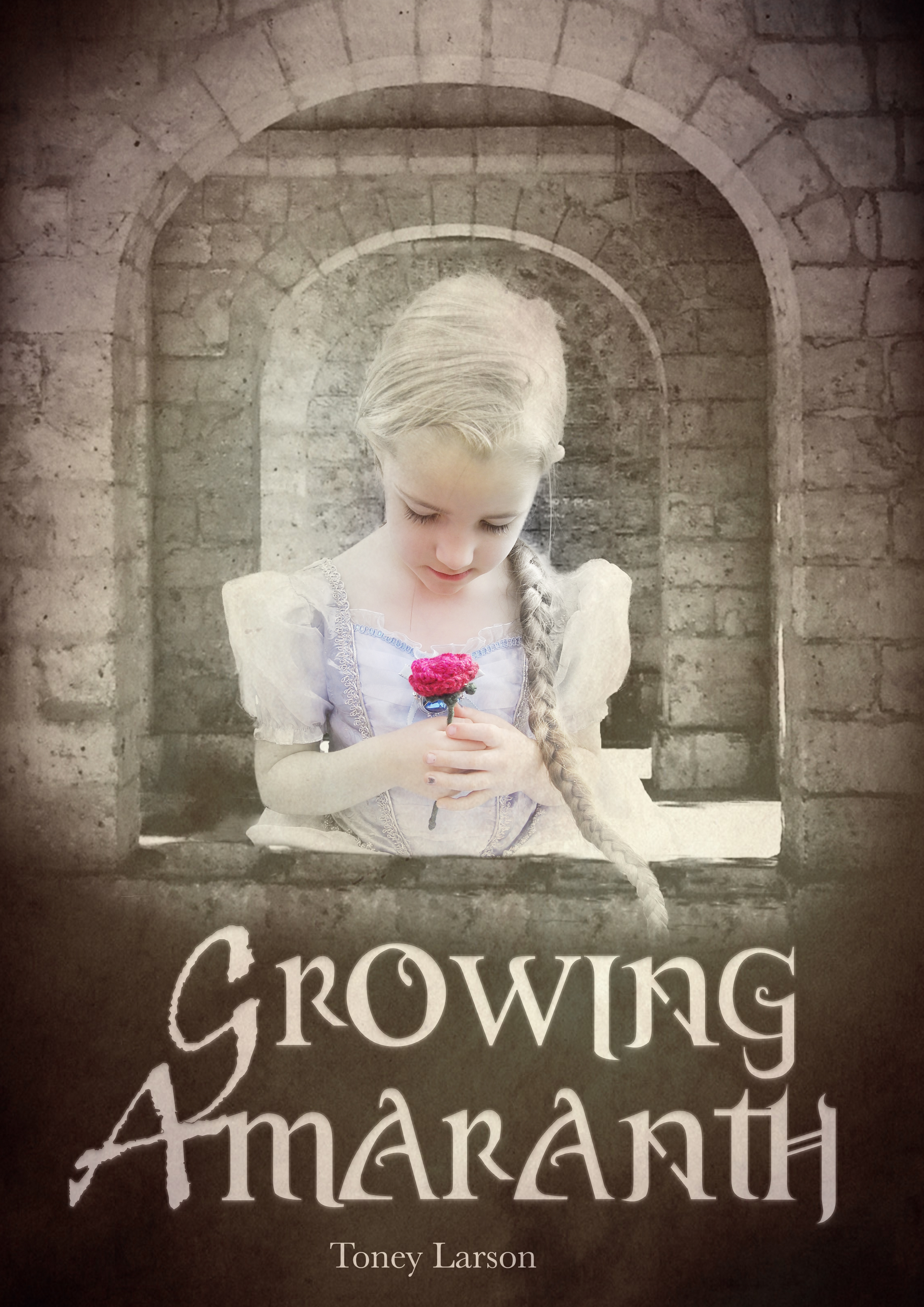
Growing Amaranth is a retelling of Rapunzel. Amaranth lives in a secluded cottage with her mother when she meets a young boy who helps her realize she’s not as free as she thought. Her mother traps her in a tower when she discovers her friendship. Amaranth starts at 9 years old, but it follows her until she is 17. Its for YA, focused more on emotionally abused youth/adult. It is set in a fictional medieval/regency time.

Amaranth2

Amaranth2

Nathan says:

It’s a nice image. Let’s make it pop!

  1. It’s the Rapunzel story? Make the braid longer! I don’t care if it actually figures into the story. Make it longer!
  2. Play with the contrast and saturation.  Make the picture come alive!
  3. Why are you hiding your byline in teeny type?  You wrote a book. Be proud! You’d got that extra space along the top — put your byline there, then make the title just a bit larger to take up the space you just vacated.

Other ideas?

Black Mirror, Shattered Screams

The designer says:

Commission work for a client.

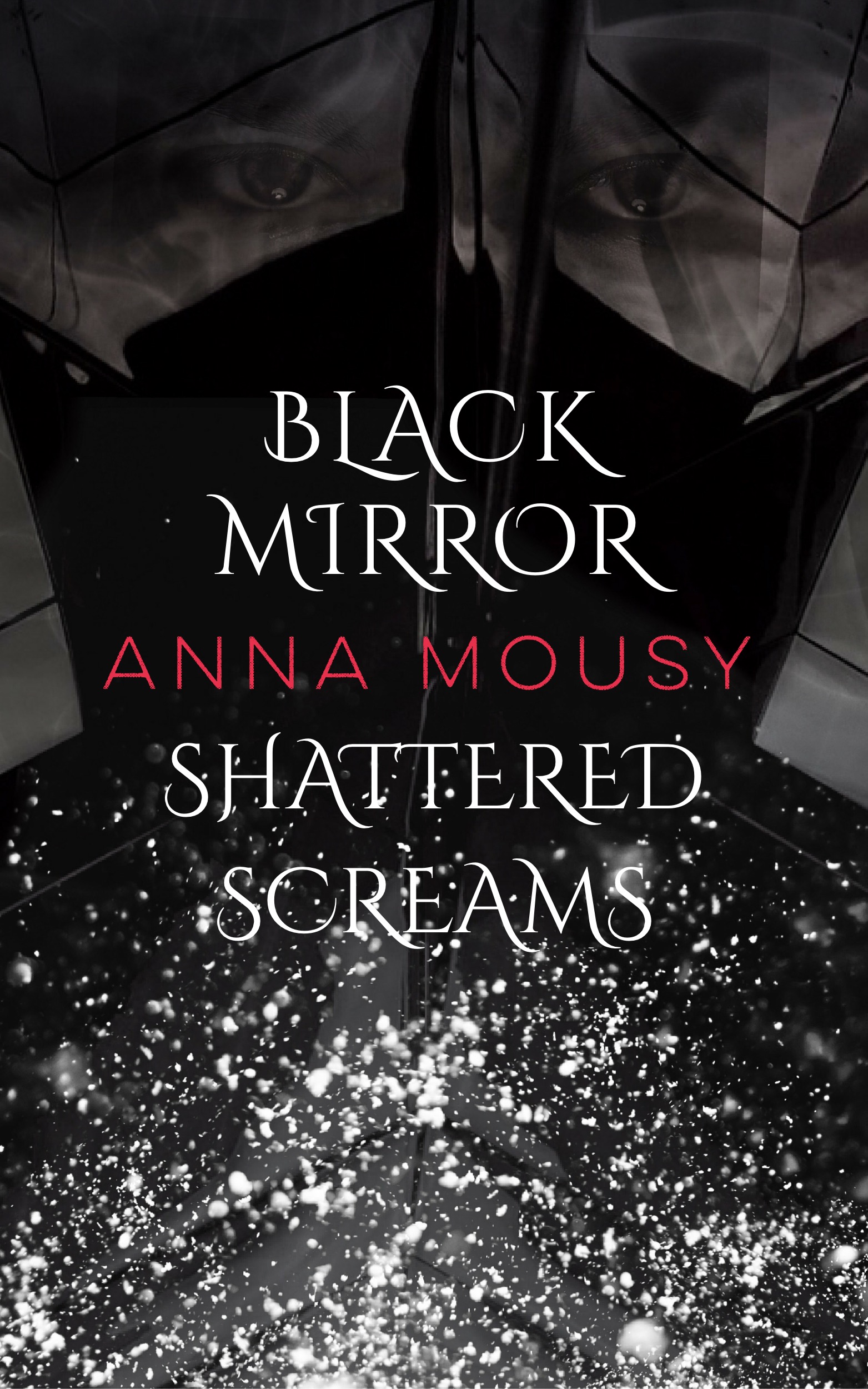
Book summary: In a world ruled by fairies, humans have developed a rudimentary communication system akin to the Internet using fairy mirrors. After a social experiment involving those mirrors spins out, two teens must decide whether to come out with the truth and face the consequences, or watch their world burn with the fire of revolution. YA magical realism thriller involving fairies and Magic mirrors, with some satirical undertones that raises questions about the role and safety of the Internet in the 21st century. Could be described as Macbeth meets The Crucible meets a magical Internet.

Designer’s note: I took inspiration from the simplistic cover of Gone Girl. While I do realize that’s an adult thriller while this is YA, I don’t think there’s too much of a difference in (cover art) style between adult and YA. The top part is supposed to be the magic mirrors involved in the book, while the bottom part is supposed to be shattered mirrors/glass. I hope those are recognizable on the thumbnail. A larger image will show the eyes in the mirror, which I hope looks creepy and mysterious. Hopefully the slightly orate font will hint at the fantasy elements, in what otherwise looks like a contemporary thriller cover.

Also, a question: I’m thinking about drawing blood in between the cracks of the top mirror part, and also have it drip down towards the title, in the style of Victoria Aveyard’s Red Queen. Would that be too much though? Thanks for all your help!

image

image

Nathan says:

No offense, but without you telling me that it’s supposed to be shattered mirrors, I would have had no clue what I’m looking at.  A large part of what makes shattered mirrors look like shattered mirrors is the glinting glass along the edges, as well as the distortion of what is being reflected (see here). Instead of trying to freehand something that looks like a shattered mirror, my advice would be to take a photo of an actual shattered mirror, and then take an image — perhaps the heroine’s face, or some other striking image — and break it up between the shards, the way that a real shattered mirror reflects.

(Gotta tell you, “floating eyes” is a cliche we often see over at LBC.com — it’s been used poorly so often that I don’t know if it can be done right anymore.)

I also have a real problem with the title being divided by the byline.  It seems like an attempt to be overly clever, at the expense of readability.

And then there’s the fact that the title and byline are crunched into the center.  It’s not as if there’s stunning artwork that you don’t want to cover up, nor that it looks like an intentional use of negative space, what with all the meaningless detail/texture filling the rest (is that snow?).

I’d say make the text bigger (with the title separate from the byline), use an actual shattered mirror, add what you want into the mirror shards, and call it a day.

Anyone say different?

Dead Line

The author says:

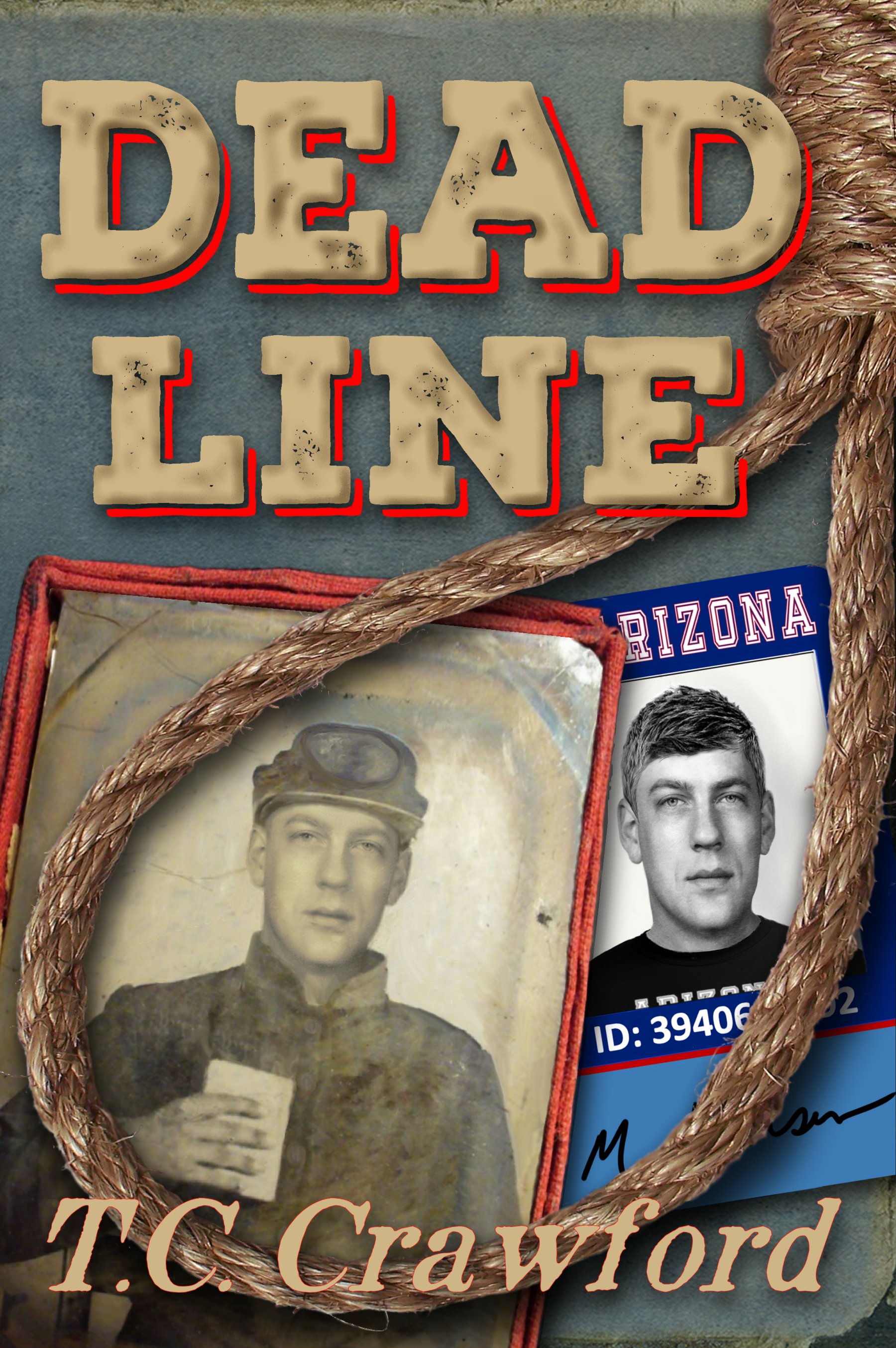
Two men. Two centuries. One destiny. Tom Dorin, a maimed and disillusioned veteran of the Civil War, builds a new life in the Arizona territory. Jon Hansen, a graduate student in Tucson, Arizona, finds an antique photograph in a decrepit roadside museum. A disturbing portrait of a long-dead man who could be his twin. Only two facts are known about the man in the tintype. His name was Tom Dorin. On March 13, 1874, he hanged. What begins as research into Tom Dorin’s life for a master’s thesis, becomes an obsession for Jon Hansen. An obsession that consumes every waking moment, and threatens every relationship in his life. Until the morning he wakes in Tom Dorin’s bed. In the Arizona Territory. On October 19th, 1873. Only one fact remains certain. It is recorded history, unalterable. On March 13, 1874, Tom Dorin hangs. No one knows why.
DEAD LINE Critique

DEAD LINE Critique

Nathan says:

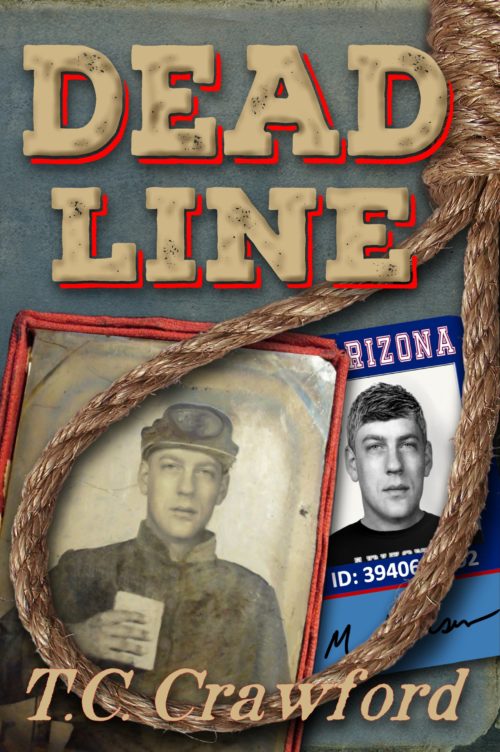
What you’ve got here is well-rendered.  However, I think some changes to the initial idea are in order for the cover to attract readers like it needs to, for a story that is essentially “Somewhere in Time meets Back to the Future III.”  (Yes, that means a lot of work for you if you follow my critique. No, I’m not sorry.)

First: The strong red and blue elements of the cover call to mind not just a western, but a pulp western magazine from the thirties and forties. Since your story isn’t a standard shoot-’em-up, I think you may be giving the wrong impression and turning off the readers who would actually enjoy the story.

Second: The two different photos of the same face is a good idea in theory.  However, to really work, the pictures need to be in complete parallel, directly across from each other, with each taking equal visual weight.  Here, the tintype occupies much more space, but the isolated blue on the student ID, and the much starter monochrome in the modern picture, keep the two from being balanced. And while the cover makes sense once someone has read the synopsis, I don’t think it works the other way around, which is how it needs to work.  And I don’t know if monkeying with the balance between the two pics will fix it.

If someone handed me that synopsis and asked me to design a cover, here’s what I’d do: A sepia-toned western street with people in period garb, and in the very center of the illustration, a figure in modern clothes in full color, facing away from the reader.  I think the normal color at the center would draw the eye toward its natural center of focus, and the contrast between modern and period clothing would be very apparent, making it clear that this is a story about a modern man in the Old West.  (I’d render the title in a distressed western font.)

Anyone have different ideas?
Vandal Valkyrie

The author says:

A dark fantasy and cosmic horror novel, book 1 in a series. The main characters quest to bring justice to the dread lord of an evil nation. But all of their actions are orchestrated by titanic forces that move in the shadows of history, seeking terrible ends that these mortal pawns cannot begin to imagine or oppose. Synopses: The End of Days has come and gone. Horrors from beyond sanity lay siege to reality. In this world, Alfair and Paemani come of age fighting to build a nation in the perilous North Marshes. Centuries later, their scion the Princess Valkyrie crusades against the Mad Count of Harkenvold. But against the Horrors, the Mad Count may stand as the only true hope. The story follows Alfair, Paemani, and Valkyrie as they seek victories that may imperil creation itself and fight wars that they may desperately need to lose as the North Marshes rises to prominence in an utterly hostile world.

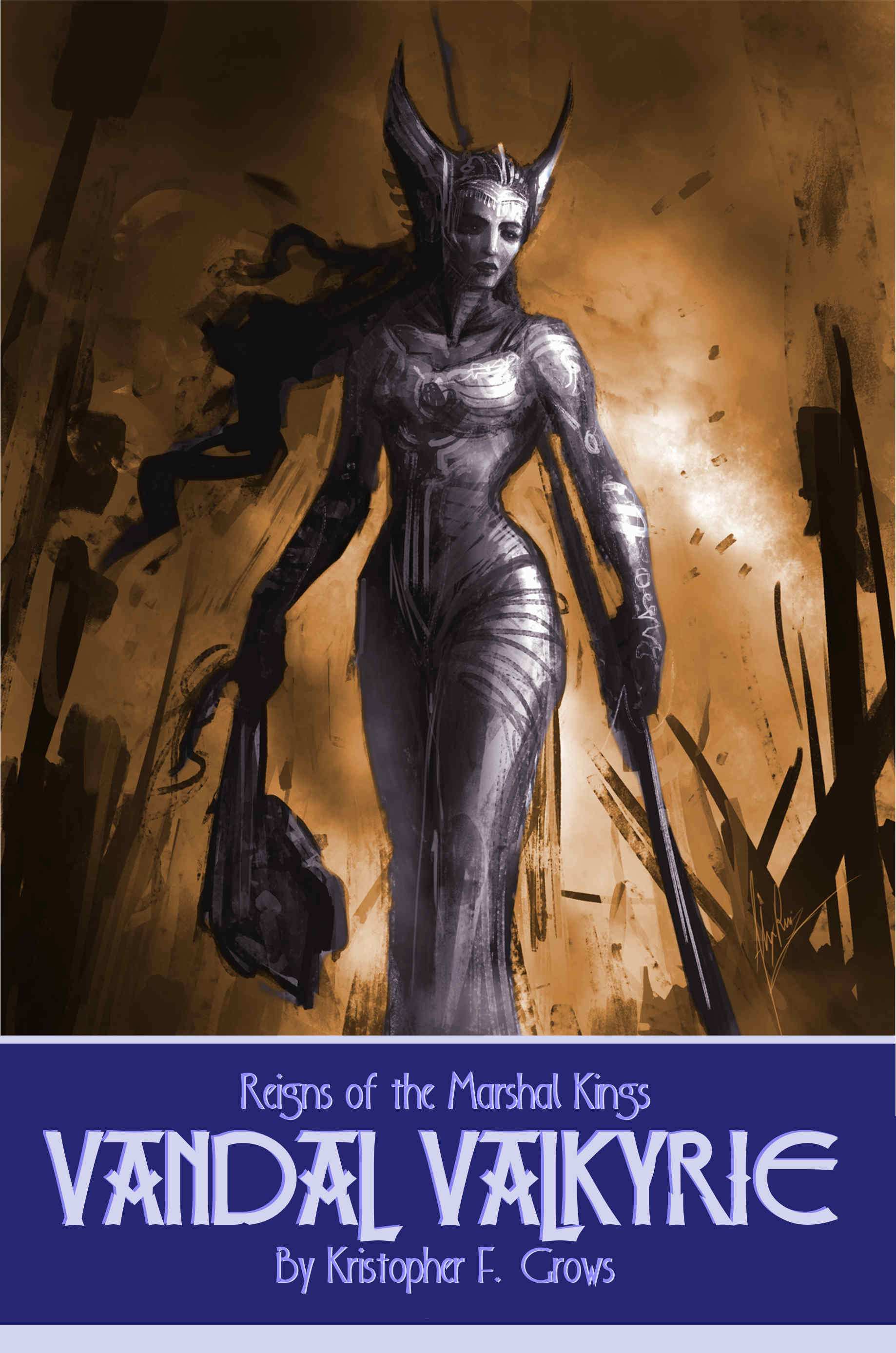
The art is a sketch by Alex Ruiz at Conceptmonster.net used with permission, my role was in colorizing and formatting it as a cover.

Vandal Valkyrie Cover

Vandal Valkyrie Cover

Nathan says:

The art is terrific — sketchy, of course, but still bold and evocative for all that. You made a good choice.

The type… not so much. Problems:

  1. Every time I see the type isolated into a section away from the art, I think, “This art obviously wasn’t commissioned for this cover — it was acquired, and then someone tried to make the type fit.” Which is exactly what happened here, but you don’t WANT it to look that way.  I took a look at the original art to see if you have any more room at the bottom. You do. USE IT. You could place the byline at the top, and the title and series title at the bottom. Or place the title across her midriff (the two focal points are her head, and the head in her hand). But get rid of that pasted-on blue box.
  2. Both fonts you chose are ornate enough to be hard to read.  I think that with “valkyrie” in the title and a warrior woman dominating the illustration, you don’t need the Norse-ness in the title typeface to sell the concept; concentrate on impact and readability instead. The same goes for the series title and byline: the smaller the type is, the clearer it needs to be in order to be read.

Other comments?

Locksmith’s Journey [resubmit]

The author says:

“Locksmith’s Journeys” is the sequel to the YA science fiction novel “Locksmith’s Closet.” Lachlan Smith and his immediate circle of family and friends continue their search of the future through the time portal to learn the secret of what happened to the human race. Back in the present, they learn who made the portal and why.

LJ cover version 1.3

LJ cover version 1.3

[original submission and comments here]

Nathan says:

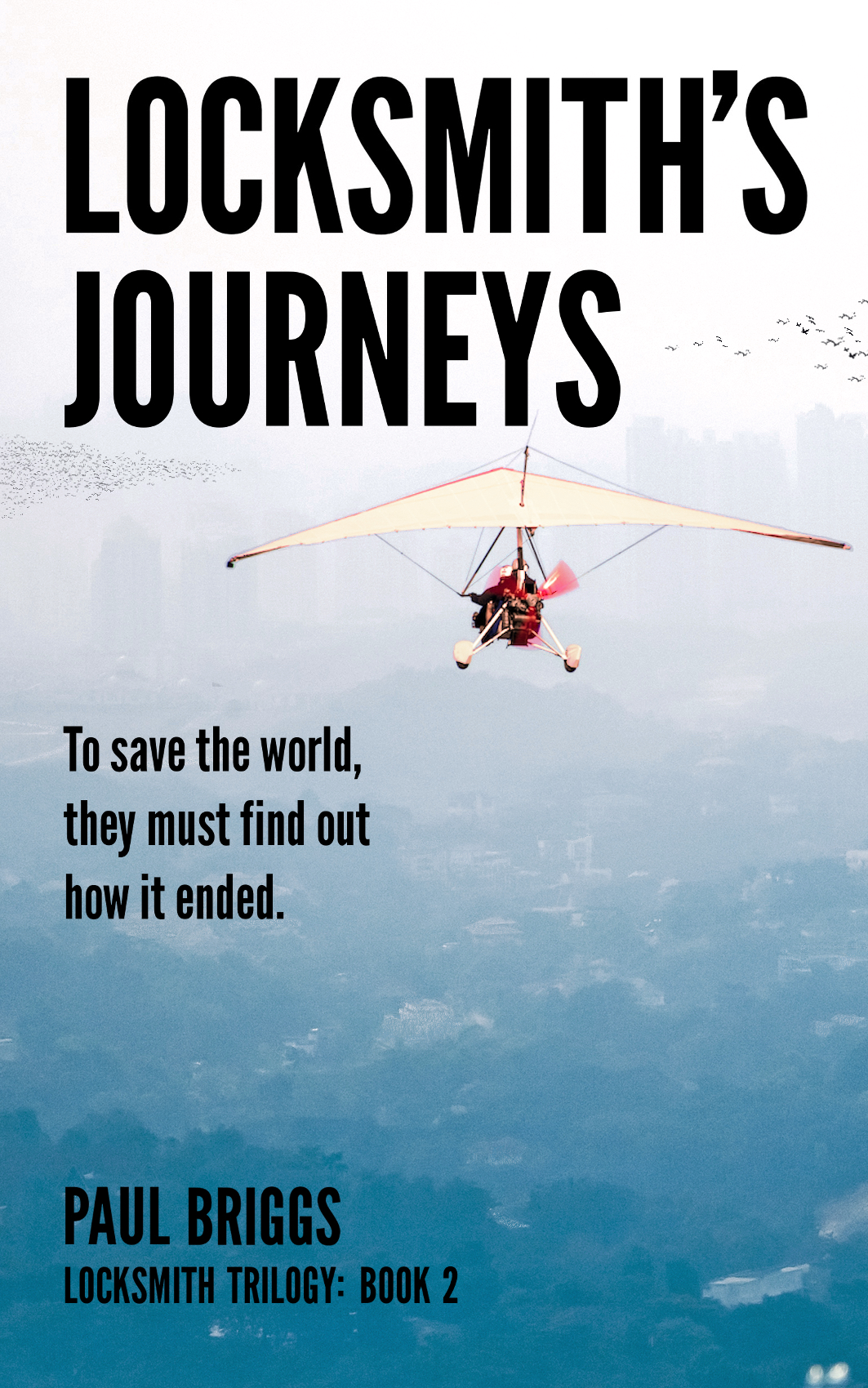
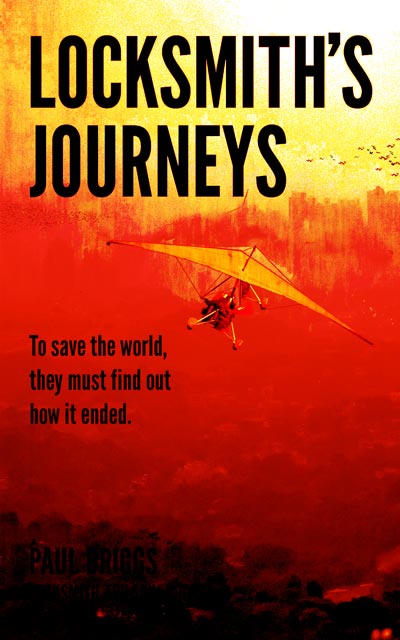
Well, at least the paraglider is bigger…

It still lacks any excitement, any danger, any indication of genre or audience.  If I were to see this originally in thumbnail, I’d assume it was one of those “memoirs of my not-too-interesting life” volumes, because it all looks so peaceful.

Here’s my five-minute do-over:

LJ-cover-version-1

In addition to the obvious color change to a more “dangerous” hue, I also tilted the paraglider, because everything on this cover was so square that the contrast is appealing, and diagonals give an impression of instability and dynamism.

But I still don’t think it’s a good cover, and I don’t think this can become a good cover.  You’ve stepped away from the human figures on your first cover, which are definitely a better way to market to your audience than a distant paraglider.  You need to do that whole “Old Spice” thing: Look at successful YA books covers, then at yours, then at other covers, then back to yours…

Anyone think I’m wrong?