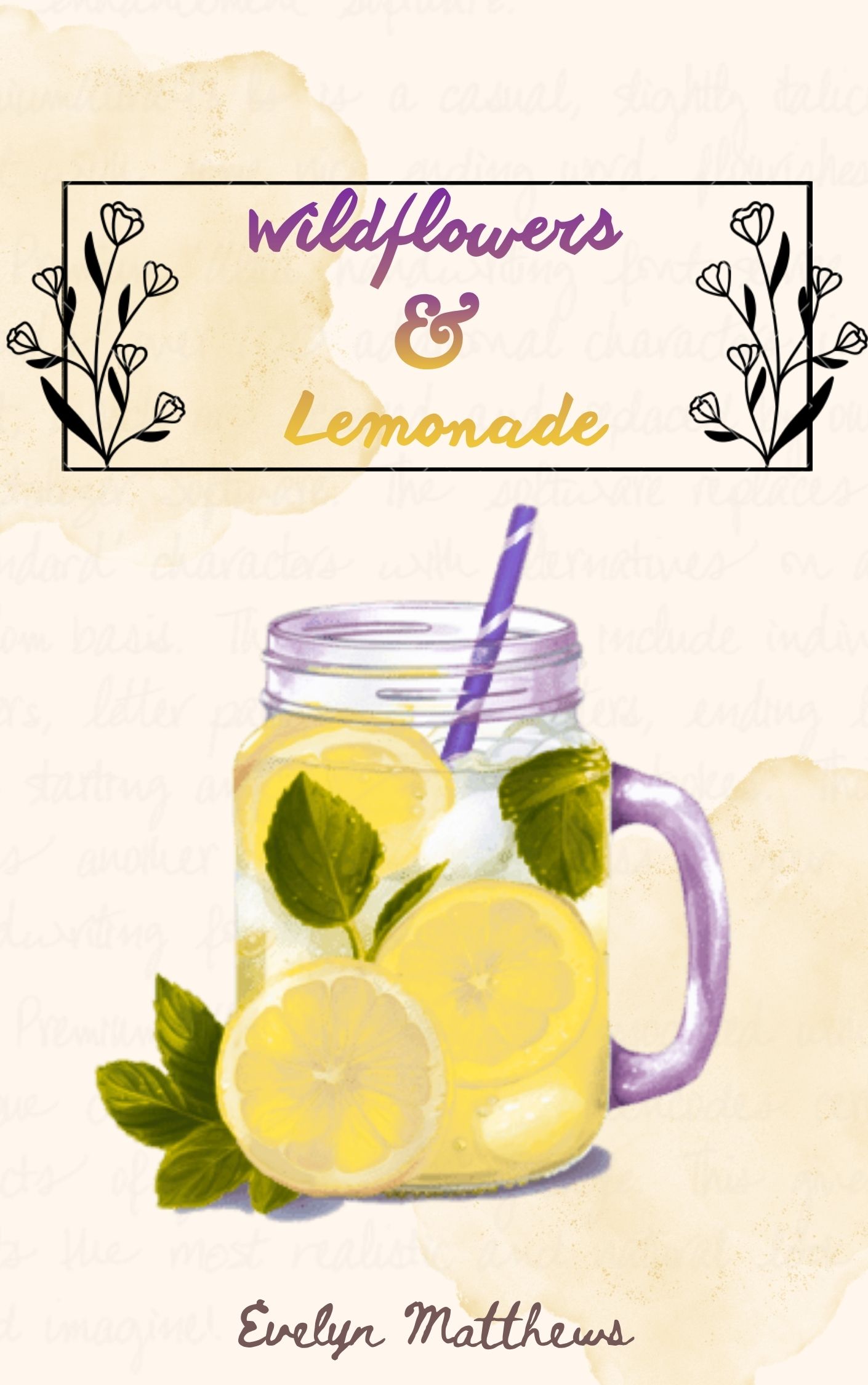
The author says:
“Wildflowers & Lemonade” is an epistolary-style fiction book set in a post-apocalyptic world. The story starts out as a boy-meets-world, but as it progresses the readers realize that the world–and the main character– is not quite right. The novel is likely to appeal to readers of Emily St. John Mandel and Maggie Stiefvater.
Nathan says:
Over at lousybookcovers.com we have a category for “false flagging” — covers that completely misrepresent the content of the book. From what you tell us, this is Platonic ideal of that category.
This is NOT the cover that will attract the attention of anyone who wants to read a post-apocalyptic story. Conversely, the people whom it DOES attract, expecting a light and carefree summer read, will feel betrayed by a post-apocalyptic story.
Now, you may say that you want the post-apocalyptic setting to be a surprise. Fine. But in that case:
a) Why do you tell US about it in the first sentence?
b) Even if you want the exact nature of the world being “not quite right” to be a surprise, you still need to indicate from the beginning that this is a story where Things Aren’t What They Seem. Again, people who are attracted to the cover won’t be charmed or impressed when the story turns out to be something they weren’t expecting; they will feel cheated. And the people who would enjoy that story simply won’t pick up your book.
Sorry, but this needs a conceptual re-do.
This cover has several issues, not the least of which is the point Nathan brings up: the cover doesn’t remotely suggest the sort of story you describe. You need to rethink the cover from scratch. There are problems with the design itself, but those are moot since the cover needs to be redone from square one.
Indeed, if asked to guess what kind of book this was just from looking at the cover, I would have said it was probably a book of nostalgic poetry about someone’s low-tech childhood. If you want a book cover for a seeming slice-of-life story set in a “not quite right” post-apocalyptic future (which sounds like a classic setting for just about any kind of dystopian novel—Lois Lowry’s The Giver was set in just such a future), there needs to be something unsettling about the cover from the start. By themselves, there’s nothing inherently unsettling about wildflowers or lemonade; so what else have you got?
Without knowing the plot of your story, about all I can say is that since wildflowers and lemonade are not inherently unsettling, you need to combine them with something that is. This actually being a post-apocalyptic story, one way to do that would be to show the titular wildflowers and lemonade in conjunction something typically associated with post-apocalyptic stories: for example, if the protagonist is—let’s say—a young boy selling bouquets of wildflowers and glasses of lemonade to passing motorists at a roadside stand in a wholesome-looking suburban neighborhood like one might have seen in President Eisenhower’s America, why are all the wildflowers dead and dried, why are all the trees and shrubs and grass in everyone’s yards dead, and why is that lemonade glowing a sickly green color? (Those passing motorists won’t mind a little nuclear fallout in their lemonade now, will they?)
That’s just a hypothetical example, but whatever is supposed to be secretly horrific about your story, that’s what you need to show in some way, shape, or form on your cover. Show people in your target audience something that makes them say “Am I the only one who sees what’s wrong with this picture?” Even if you risk spoiling the surprise a bit, marketing takes priority over “artfully” subverting the audience’s expectations when designing a book cover.