Category: Covers

Time Winders

The author says:

A time travel novel with a strong, female protagonist.
TW cover Critique

TW cover Critique

Nathan says:

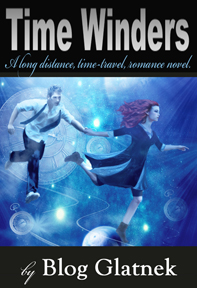
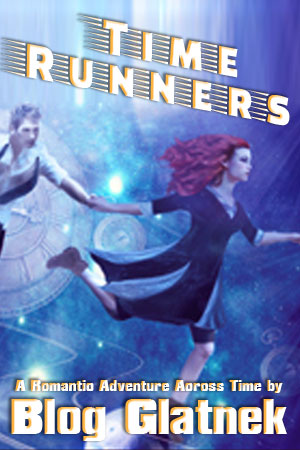
Hmm. You didn’t give us a very big image to examine, so we can really only critique it as a thumbnail.  There’s only a very short description to compare it to, so forgive us/me if the advice we give doesn’t match the novel well.

First: Fonts. My rule of thumb is that, unless you have a compelling reason, try to limit yourself to two typefaces.  I don’t think you’ve got a compelling reason; what’s more, the most difficult-to-read font is used for your smallest text. (Another rule-of-thumb: The smaller the text is, the easier you should make it for the reader to read.)  And your largest type, your title, is in your most boring font.  I understand that big, bold sans-serif typefaces can appear strong, but I think this one misses the mark.

Second: Cover vs. description. All that we know about this time-travel novel, really, is that it has “a strong, female protagonist.” If that’s the most important thing you want the reader to get from your cover as well, then the image should concentrate on the female character more than the male; as it is, they have pretty much equal visual weight.  I don’t know if the original artwork has cropped-off portions; if it does, you might want to crop it differently so that the female is central and the male is off to the side and partially cropped.

Third: Layout.  The pattern you use — am image in the middle, completely separate from text above and below — is more often used for non-fiction than fiction books.  Again, if the original art allows it, I’d recommend the text go on top of the image.

Fourth: The words.  Maybe it’s just me, but I really dislike subtitles which essentially tell us the (sub-sub) genre of the book.  Maybe it’s because you see it more in crank-em-out erotica ebooks: “A Polyamorous BBW Shifter Billionaire Romance,” etc.  I’d recommend something more like “A Romantic Adventure Across Time” or somesuch — something that tells the reader about the contents without seeming like a taxonomic classification.

Fifth: The words, part two. I understand why you have “by” in front of your name; it’s such an unusual name that readers likely wouldn’t immediately identify it as the byline.  However, the “by” just seems like it sticks out there uncomfortably.  You could solve the problem by combining it with the tagline and putting it just above the byline — “A Romantic Adventure Across Time by” — instead of under the title.

I really want to do a five-minute mock-up to show you how these fixes would fit together, but the small size of the image you’ve given us doesn’t lend itself well to that.

Eh. what the heck.  Here’s something.
timerunners-2

These aren’t the fonts I would go with for the final, but I think this gets across all the ideas I was trying to spell out.

Anyone see something different?
 

Wanderer’s Diary: Daydreams

The author says:

Wanderer’s Diary: Daydreams is a collection of emotions, friendship, and practical life. The book includes sketches, short stories, an essay, and poems by Qumber Rizvi. A few of the contents are detailed here.


1. Just To Hold Your Hand (Sketch): She fulfills his dream suddenly when she holds his hand and walks with him. He experiences what he had never dreamed of. Or, perhaps, dreamt everyday. Don’t put it down before the climax. There is a BIG twist.


2. Imperfect Us (Sketch): John Smith has a big crush on his classmate. She is the most perfect person he ever met. Even perfect that himself. But what happens when she rejects him? 3. The Best Buddies (Story): Three friends, classmates are the weirdest buddies in the school. They, together, can do what others won’t even think of. A humorous collection of their crazy deeds in their high school.


3. Change In My City (Story): Author returns to his city after six years. Many things are changed there, but what change he observes is what others won’t really see as significant as he does.


Three poems in Wanderer’s Diary: Daydreams are: 1. Forgery 2. I Was Blind, But Now I See 3. Park Bonus Read (Essay) – Internet Is A Boon

Wanderer's Diary Daydreams Large

Wanderer's Diary Daydreams Large

Nathan says:

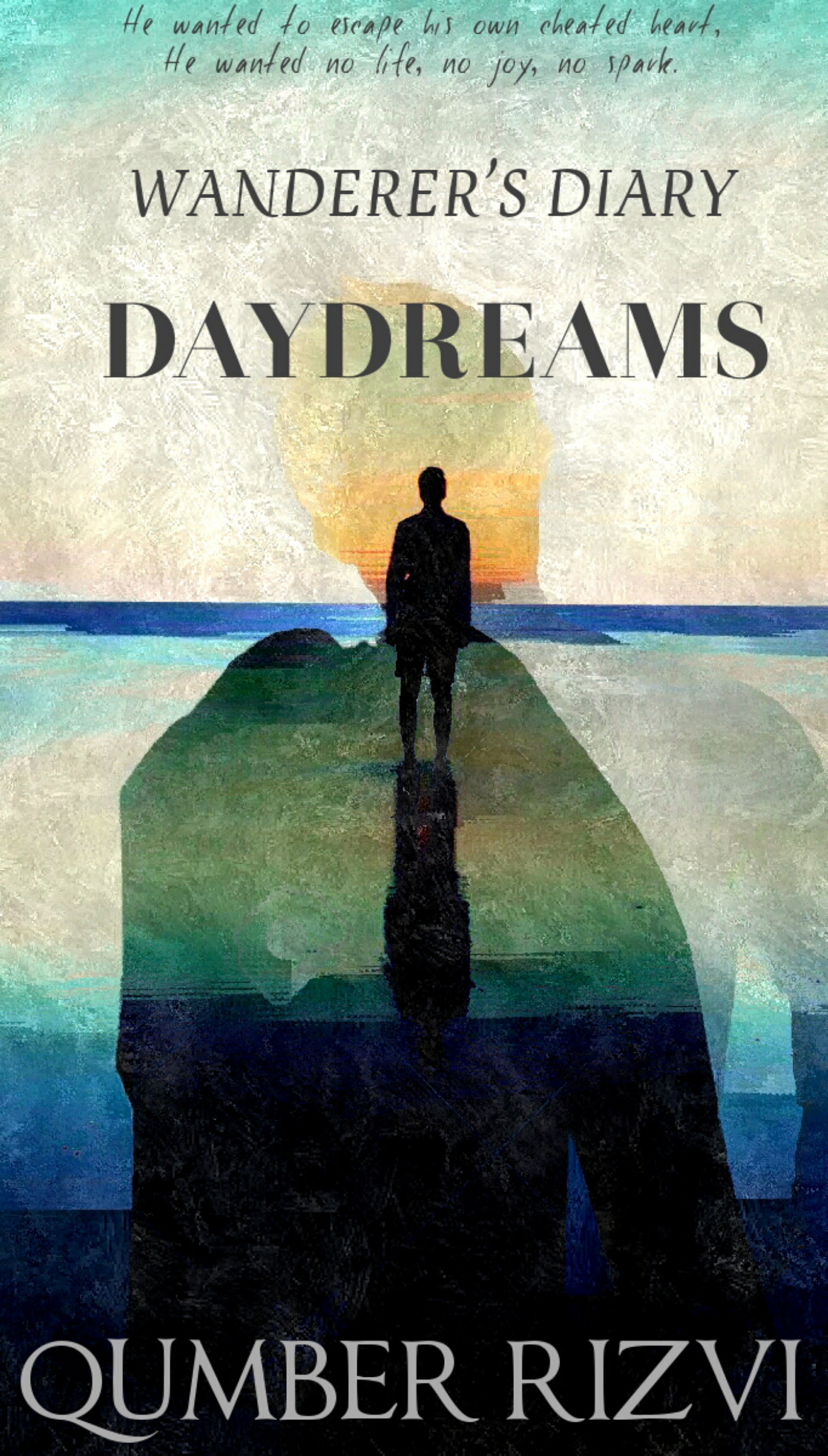
The great thing about single-author collections with varied content is that the cover doesn’t have to represent any single theme; it just needs to be visually intriguing.  I think you’ve got that here.

The tweaks I would look at are these:

1. The dimensions are a bit elongated — not necessarily a problem, but given that a lot of ecommerce sites such as Amazon create their thumbnails by defining a maximum height, your cover will look smaller in thumbnail and be that much harder to see.  It may seem like a little thing, but of such little things are big things determined.

2. There’s no indication on the cover that this is a collection. In fact, the tagline at the top makes it seem that this is definitely not a collection, but a single story.  (The tagline is also hard to read at normal size, a combination of the irregular typeface and the color behind it that reduces the contrast.)  It seems that both 1. and 2. (partially) can be improved with one edit: Chop the cover down to a 2×3 proportion, sacrificing that blue area at the top of the artwork and the tagline over it.

3. Your name being as unusual as it is, it won’t strike readers immediately as a name.  (I’m not saying that Stephen King’s success comes from being named “Stephen King,” but it didn’t hurt.)  But you can improve this, and solve the other half of 2., by adding “Stories and Poems by” or “A Collection by” above your byline, which will both identify your name as a name and give more of a clue to the contents.

4. Even if we cut off the tagline at the top, that still leaves us with three different fonts on the cover, and all three of them are serif fonts, which tend to clash with each other.  (That’s why you see so many book covers that use two fonts — one serif, one sans serif).  Since the byline is far from the title, you could use a single serif font for both parts of the title (maybe with “Wanderer” in regular weight, and “Daydreams” in bold) without much danger of clashing.  I would definitely remove the italics from “Wanderer’s Diary.”

Other ideas?


Water Pearl

The author says:

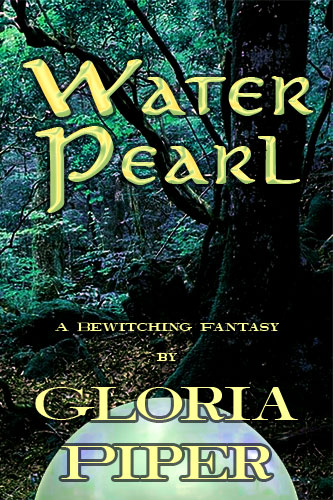
In this fantasy, a magic pearl made of water by a forest sprite serves a major role throughout the story. A youth “borrows” it and aches to return it, but circumstances prevent him until the end.

for-waterpearl-4-png[1]

for-waterpearl-4-png[1]

Nathan says:

The more I do this, the more I become convinced that the two most basic parts of any book cover are:

  1. Color scheme
  2. Typeface(s)

In other words, it would be possible to create an acceptable cover for a fantasy novel using nothing but this photograph, with color manipulation and appropriate fonts.

First: The photograph is too “blah.” It looks like exactly what you’d see if you, well, took a photograph in the forest.  But fantasy needs to be more intense.  What colors could suggest a magical forest? Or magical water?

Second: Neither font you have here is terribly evocative. The Rosetti font you use for the title is ornate, yes, but gets no support from layout or color, and the Comic Sans… Sorry, there is NO appropriate use for Comic Sans.  It’s so overexposed and hated these days, I wouldn’t even use it for a coloring book.

Third: There’s no detail in the background image that you need to be sure not to cover, so the off-center placement of both title and byline accomplish nothing.  You may be trying to achieve a bit of visual interest by breaking the byline into two lines, but its off-centeredness just makes it look haphazard.

Fourth: The “water pearl” doesn’t look much like a pearl. What it mostly looks like is an afterthought.

Now. The good news is that, as this isn’t a complex cover, the fixes don’t need to be time-consuming.  I did an image search and couldn’t find the exact stock photo you used, but I grabbed a more-or-less similar one to do a “five-minute fix” demo for you.

waterpearl

Definitely not the best cover for this, but it’s a quick sketch showing you what I’m talking about.

Anybody else have thoughts?

The Invisible People

The author says:

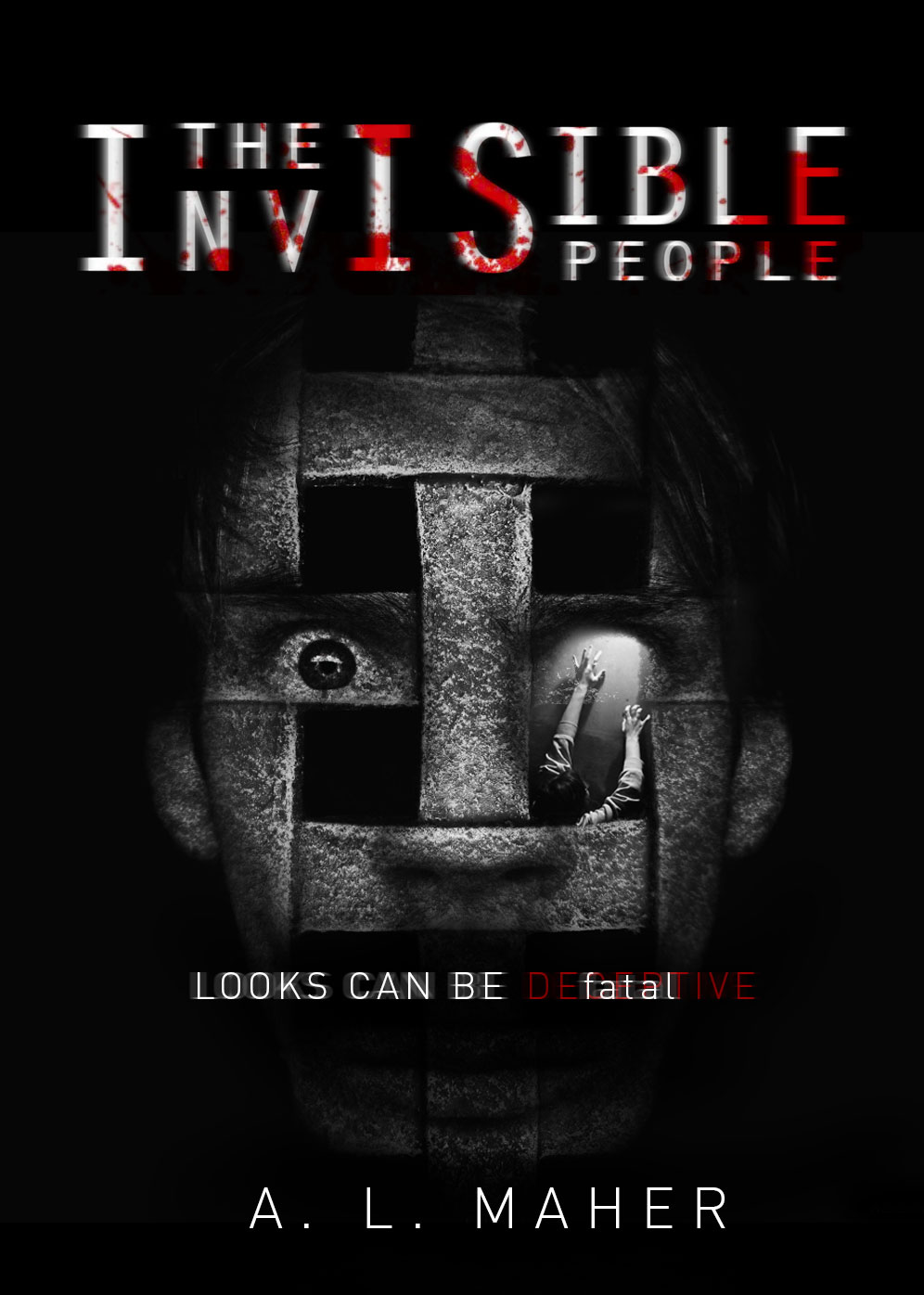
Genre: Horror Synopsis: Nobody saw them. Nobody cared. They were the perfect camouflage. It used them to hide in plain sight as the world walked on. Dan saw them. He looked up and saw the invisible people, and when he held out a helping hand, It latched on.

Tip2.3

Tip2.3

Nathan says:

Conceptually, it’s a very strong cover.  I think some fairly minor tweaks could yield huge dividends.

  1. Think about small revisions to the layout. If you concentrate on the thumbnail instead of the full-sized image, some of the weaknesses jump out at you: There’s an awful lot of black space that isn’t doing anything, the gray tones in the central graphic tend to merge together (you can’t even tell that the chin is there under the tagline), and the byline is awfully small for no good reason. If you enlarge the face (and let some of the forehead slip under the title to give room for the chin at the bottom), increase the contrast especially on the chin area, and double the size of the byline, I think the cover will have twice the “first glance” impact.
  2. I don’t think the horizontal blur on the title has the effect you want it to have. My first reaction, and I’m pretty sure this is common, is to rub my eyes in case my danged allergies are clouding my focus.  I’m also not sure the red splatters work well — they make it harder to immediately read the title, which already has a creative but counter-intuitive layout working against easy readability. (Speaking of that layout, it places an inadvertent emphasis on the “IS” of “INVISIBLE.” There are also some kerning issues.  One thing I would try, to see if it’s easier on the eyes, is reducing the “I” of “IS” to three-quarters its current size, anchored along the bottom baseline, and then do the same to the “S” but anchor it at the top. Just a thought.)
  3. Also, regarding the tagline: I think the phrase “Looks can be deceiving” is more familiar to most people.  When I tried to figure out the word behind “fatal,” I read it as “Looks can be defective.”  Red against black is surprisingly difficult to read.

(As an aside, I think your synopsis tries to hard to be mysterious that it ends up being too fragmentary to be enticing. But this site isn’t really for criticism of synopses.)

Other comments?

The Burning of Cherry Hill [resubmit]

the author says:

I hope that it’s okay that I’m submitting the THIRD version of this cover! I’ve been working hard on it, and got help from Katie Miller who posted on this site and has been absolutely priceless. I love all y’all’s help, thank you!

AmazonCover

AmazonCover

[previous submissions and comments here and here]

Nathan says:

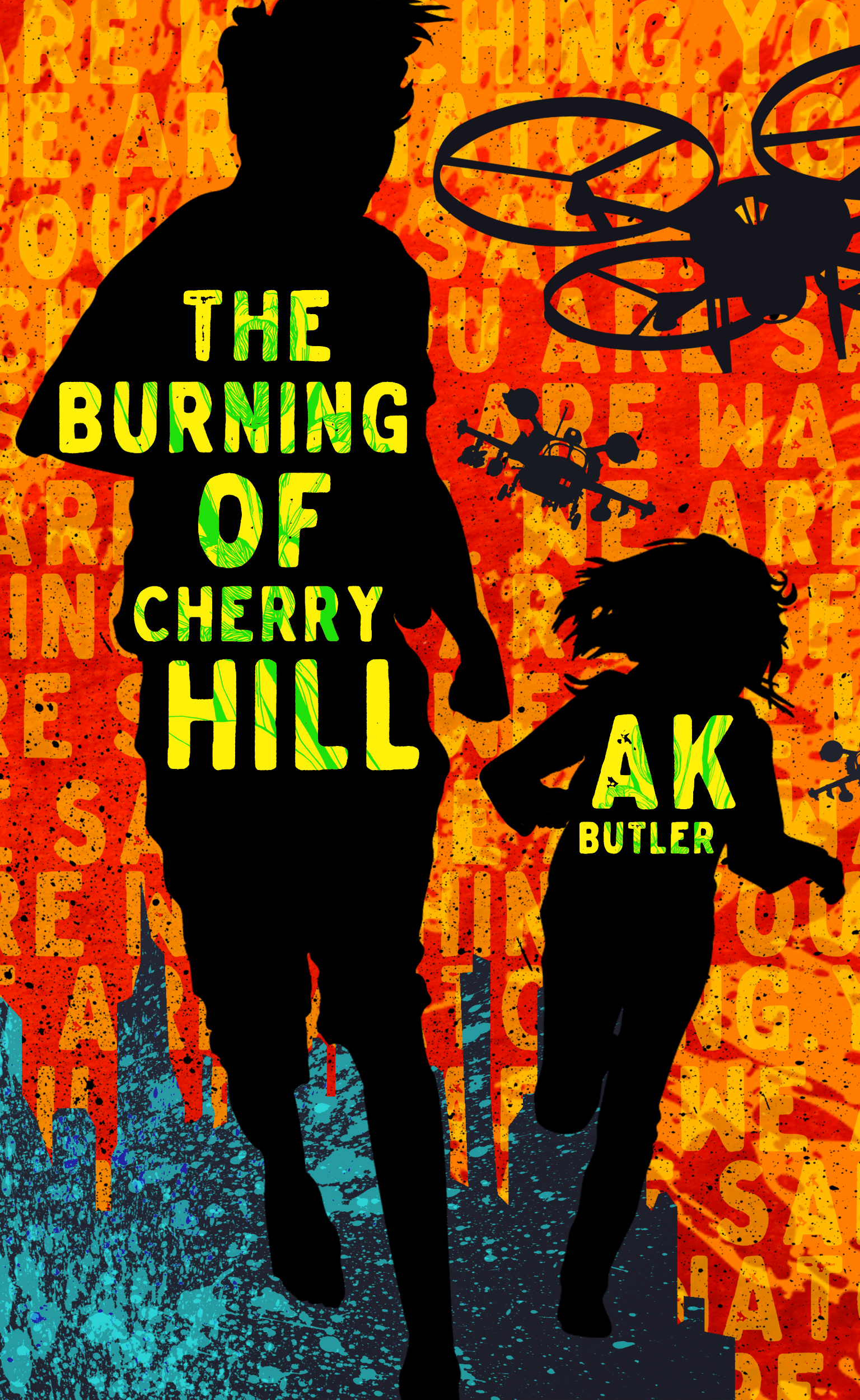
Definitely more creative and less generic.  Anything I saw from here on out is not so much “stuff to be fixed” as “stuff to consider”:

If you make the silhouettes larger, to take up more of the cover space, you can increase the size of the type proportionally. I’d especially experiment with overlapping the silhouettes of the two figures — as long as the presence of two separate people is readily seen, you can overlap and then make them bigger, taking up more of the background.  the fact that this would increase the size of the type seems like a plus to me.

Do you really want “OF” to have that much emphasis in the title? I’d definitely tweak it and see if reducing the size of that one word makes it flow better. The same with the byline; maybe reducing the size of “AK” and shifting it upward will allow “BUTLER” to grow into the arm space and thus get bigger.

Other comments?